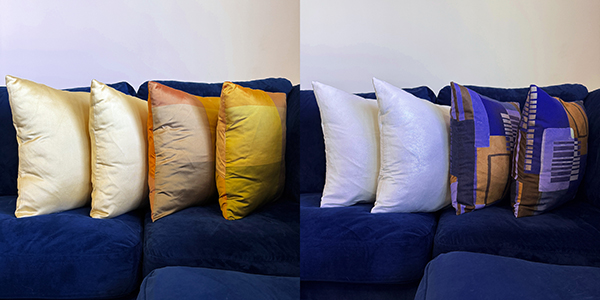
In interior decorating, if you want overstuffed luxury throw pillows, your best choice is to make them yourself. In the picture, I replaced a set of Armani silk and golden silk wool pillow covers with a custom Mood Fabrics screenprint and silver glow in viscose-linen blends.
The cost of fabric for designer pillow covers is about 50% of the retail price for brands like West Elm. For reference, you can pay upwards of $3,000 for a full set of designer pillows if you buy them from a brand and the selection will be limited to small production runs. Making your own pillow covers by hand is the only way that you can get luxury designer pillows, while choosing from a wide selection of fabrics.
Luckily, pillow covers are easy to make and even a novice with no sewing experience can stitch them together. I love the feeling of sitting on overstuffed pillows as they provide a cloud of support and comfort.
Measuring overstuffed pillow covers
Before making your throw pillow covers, you’ll want to purchase pillow inserts and measure them yourself. If you use the measurements provided by the pillow manufacturer, your pillow covers will be too large.
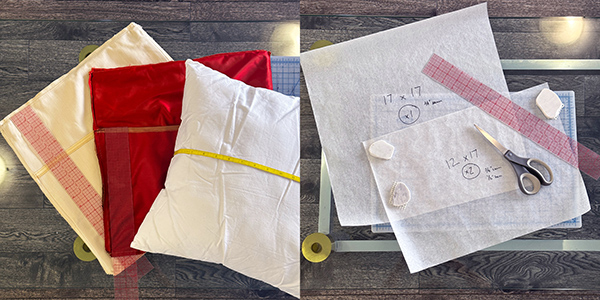
To measure a square pillow, measure in the center of one side of the pillow (not along the corners) from seam to seam. The pillow inserts in the picture were sold as 18-inch inserts, but measure closer to 17-1/2 inches.
Cutting the sewing pattern for pillow covers
For overstuffed pillow covers, you need to cut a pattern that is slightly smaller than the pillow inserts. A good rule of thumb is to make the finished pillow covers about 1 inch smaller than the inserts. For this pattern, I made the finished pillow covers 1-1/4 inches smaller than the inserts.
You’ll need to make two pattern pieces. The top pattern piece is a square that needs to include your seam allowance. For these pillow covers I used a 3/8-inch seam allowance. The measurement on the top pattern piece is:
- 17-1/2 inches (insert size) minus 1-1/4 inches (adjustment to make overstuffed covers) + 3/4 inch (seam allowance) = 17 inches (pattern size)
The bottom pattern piece is a rectangle that covers about 1/3 of the back of the pillow. As a rule of thumb you can make it about 2/3 of the length of the top piece. For these pillow covers, I used 12-inch by 17-inch rectangles.
Choosing fabric and thread for pillow covers
You can make pillow covers out of almost any fabric. If it’s your first time sewing, I’d suggest choosing a woven fabric with natural fibers. Cotton, wool, silk, and linen blends are all great choices that will last about 5 years until wear and tear shows. If you have household members who like to sit around with wet hair, then silk pillows may need to be cleaned more than other fabrics.
For envelope pillow covers, you’ll want to choose a thread colour that is close to the fabric colour but not an exact match. The thread will be visible on the backs of the pillows (similarly to how stitching is visible on jeans) and should be complementary to the aesthetic.
Sewing envelope pillow covers
To sew envelope pillow covers, start by cutting one top square and two bottom rectangles for each pillow insert. Then sew an overlock stitch along the raw edge of all your pattern pieces.
You’ll need to hem each bottom rectangle with a straight stitch. To do this, fold one edge inwards. Since I’m using a 3/8-inch seam allowance I decided to make a 3/8-inch hem. Then, sew 2 lines of stitching, one line about 1/16-inch from the bottom of the hem and one line about 1/16-inch from the top of the hem.
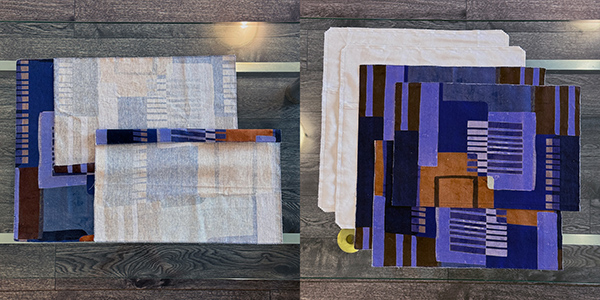
Finally, assemble the pillow covers using a straight stitch. You’ll want to pin them carefully to make sure the back of the pillow is layered in the right order. To finish the pillow covers, use pinking shears to cut diagonally across each corner. Then turn the pillow covers right side out and place them on the pillow inserts.
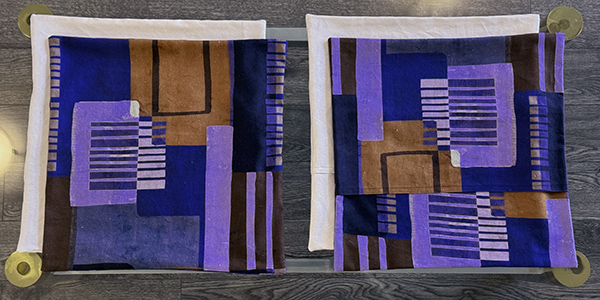
These custom, overstuffed throw pillow covers helped to refresh the colour palette of my living room, while adding a sparkle of silver that brightens the decor.
Read more here on where to buy designer fabrics and luxury upholstery options.